
Canada PR Through Study: Are You on the Right Track
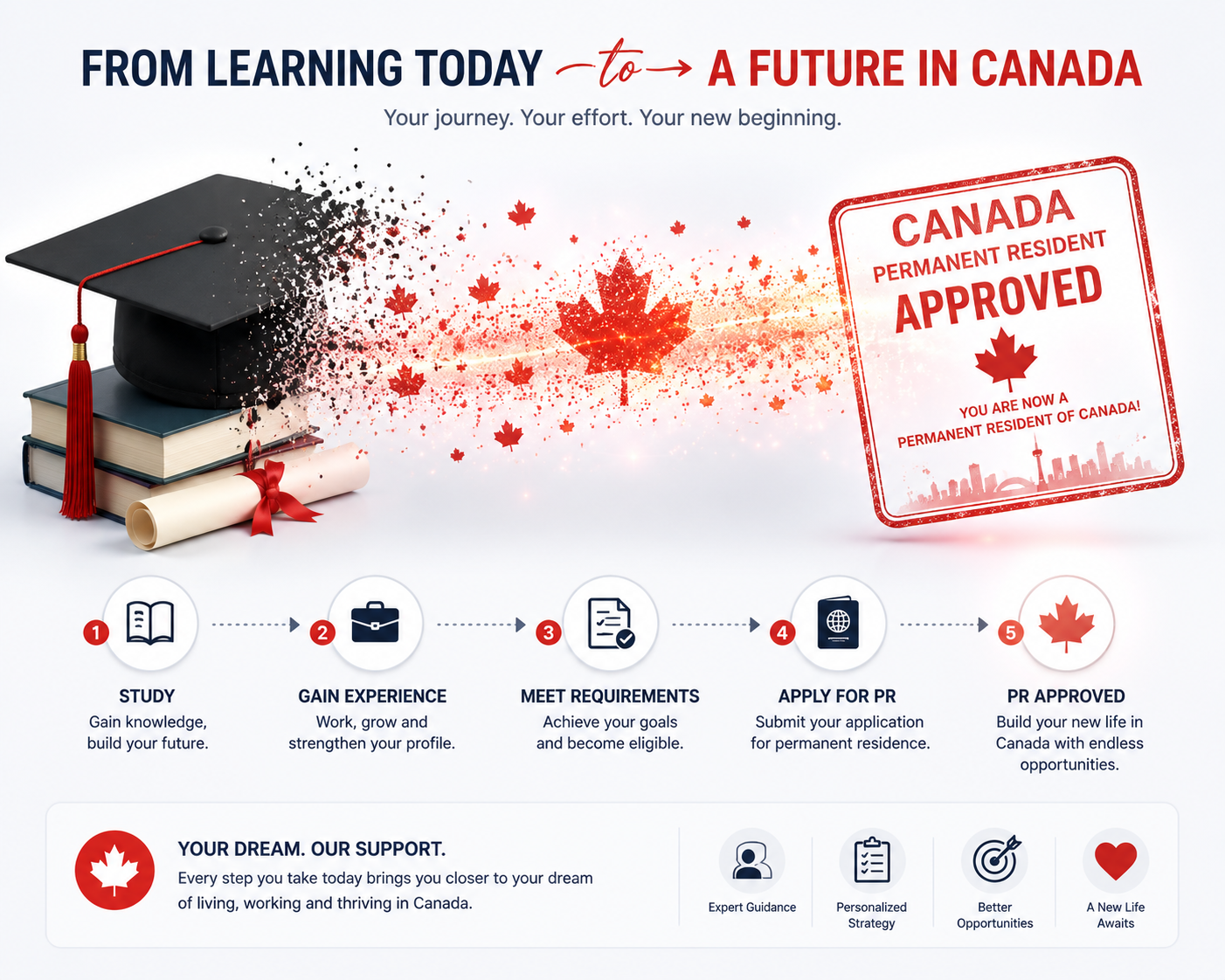
Studying in Canada is one of the most effective ways to build a path toward permanent residency. But many students discover too late that not every course, institution, or program automatically qualifies them for PR. If you are currently studying in Canada or planning to, this guide helps you assess whether you are genuinely on the right track.
Overview
Canada encourages international students to transition to permanent residents through structured immigration pathways. The Canadian government recognizes Canadian education and work experience as strong assets in the immigration system.
Several federal and provincial programs are designed specifically for graduates. Understanding which pathway aligns with your profile is the first step toward a successful PR application.
Key Eligibility Requirements
Eligibility varies by program, but most study-to-PR pathways share these core requirements:
- Graduation from a recognized institution: Your school must be a Designated Learning Institution (DLI) approved for post-graduation work permits.
- Eligible program length: Most programs must be at least two years in duration for strong PR eligibility, though shorter programs may qualify under certain streams.
- Post-Graduation Work Permit (PGWP): Gaining Canadian work experience after graduation significantly strengthens your PR application.
- Language proficiency: A valid IELTS or CELPIP score meeting minimum CLB requirements is mandatory for most federal programs.
- Proof of funds: You must show you can support yourself and any dependants.
- Admissibility: No criminal record or serious health issues that would make you inadmissible to Canada.
Application Process
Here is a simplified step-by-step path from student to permanent resident:
- Choose an eligible program and DLI: Research before you enroll. Confirm your institution and program qualify for a PGWP.
- Complete your studies: Maintain good academic standing throughout your program.
- Apply for a Post-Graduation Work Permit: Apply before your student permit expires. Your PGWP duration is generally tied to the length of your program.
- Gain Canadian work experience: Work in a skilled occupation to qualify for Express Entry or Provincial Nominee Programs (PNPs).
- Improve your CRS score: Take language tests, improve your score, and gather all supporting documents.
- Receive an Invitation to Apply (ITA): Through Express Entry draws or a provincial nomination.
- Submit your PR application: Complete your application through the IRCC portal within the deadline provided.
Required Documents
Gather these documents well in advance to avoid delays:
- Valid passport and travel history
- Canadian educational transcripts and degree or diploma certificate
- Language test results (IELTS, CELPIP, or TEF for French)
- PGWP copy and employment records
- Reference letters from Canadian employers
- Police clearance certificates from all countries of residence
- Medical examination results from a panel physician
- Proof of settlement funds
- Express Entry profile or provincial nomination letter (as applicable)
Benefits and Limitations
Benefits
- Canadian education is valued under the Express Entry Comprehensive Ranking System (CRS)
- PGWP allows you to gain skilled work experience, which further boosts your CRS score
- Provincial Nominee Programs often have dedicated streams for international graduates
- Strong language skills developed during study improve your immigration profile
- Familiarity with Canadian culture, work environment, and systems gives you a practical advantage
Limitations
- Not all programs or institutions qualify choosing the wrong school can disqualify you from a PGWP
- Short programs may result in a shorter PGWP, limiting the work experience you can gain
- Express Entry is competitive and an ITA is not guaranteed even with a strong profile
- PR processing timelines can vary and are subject to IRCC workload
- Provincial streams have their own criteria that may not suit every graduate's occupation or location
Common Mistakes to Avoid
- Enrolling in a non-DLI institution: Always verify your school's DLI status before applying.
- Choosing a program only for PR purposes: Select a field with genuine Canadian labour market demand.
- Missing the PGWP application deadline: Apply before your student permit expires or within the allowed transition period.
- Neglecting language preparation: Many applicants underestimate the CLB score requirements. Prepare early.
- Ignoring provincial pathways: Federal Express Entry is not the only route. Many provinces actively recruit graduates.
- Waiting too long after graduation: Delays in gaining work experience can affect PGWP validity and eligibility windows.
Frequently Asked Questions
Does every Canadian university degree qualify me for a PGWP?
Not automatically. Your institution must be a Designated Learning Institution (DLI) and your program must meet the eligibility criteria set by IRCC. Always confirm both before enrolling.
Can I apply for PR directly after graduation without work experience?
Some provincial streams allow recent graduates to apply without extensive work experience, but federal Express Entry streams generally require skilled work experience. Your options depend on your specific profile and the programs available at the time of your application.
What if my PGWP expires before I receive my PR?
If you have applied for PR and your PGWP is expiring, you may be eligible for maintained status or a bridging open work permit. Consult a regulated immigration consultant to assess your specific situation.
Is a two-year program always better than a one-year program for PR purposes?
Generally, a two-year program results in a longer PGWP, which gives you more time to gain Canadian work experience. However, program choice should also align with your career goals and labour market demand in Canada.
Can my spouse work in Canada while I am studying?
Depending on your student permit category and the institution you attend, your spouse may be eligible for an open work permit. Eligibility rules for spousal permits have been subject to policy updates, so verify current IRCC guidelines before making plans.
How Visas Avenue Can Help
At Visas Avenue, our regulated immigration consultants evaluate your complete profile your education, work history, language scores, and target province to map out the most suitable PR pathway for you. We help you avoid costly mistakes and keep your application on track from the first step to approval.
Conclusion
Studying in Canada can be a powerful bridge to permanent residency, but only if your choices are deliberate and informed. From selecting the right institution to applying for the correct immigration stream, every decision matters. Start early, plan carefully, and seek professional guidance to make your Canadian PR journey as smooth as possible.




Anusha V. Ramani
A group of diligent team members I must say! Very prompt and thorough in their job. Would...

Varun Thomas
Got our Canada PR done and I must say they are really professionals and they know what...

Vinay Upadhaya
Co-operative and Trained Staff to handhold you throughout the process. Mr.Vinay Upadhyay

Runzhun Gangrade
Great service and good support from the entire team. We had a great experience working...

Aakanksha Singh Chauhan
Thank you so much for your help Mrigya & Arpita. You keen sense of dedication to my...

Sanjeev Sharma
Very Professional Consultancy, which has actual meaningful escalation Matrix system for...