
Australia PR Invitation Rounds: Are You Even in the Pool to Be Selected
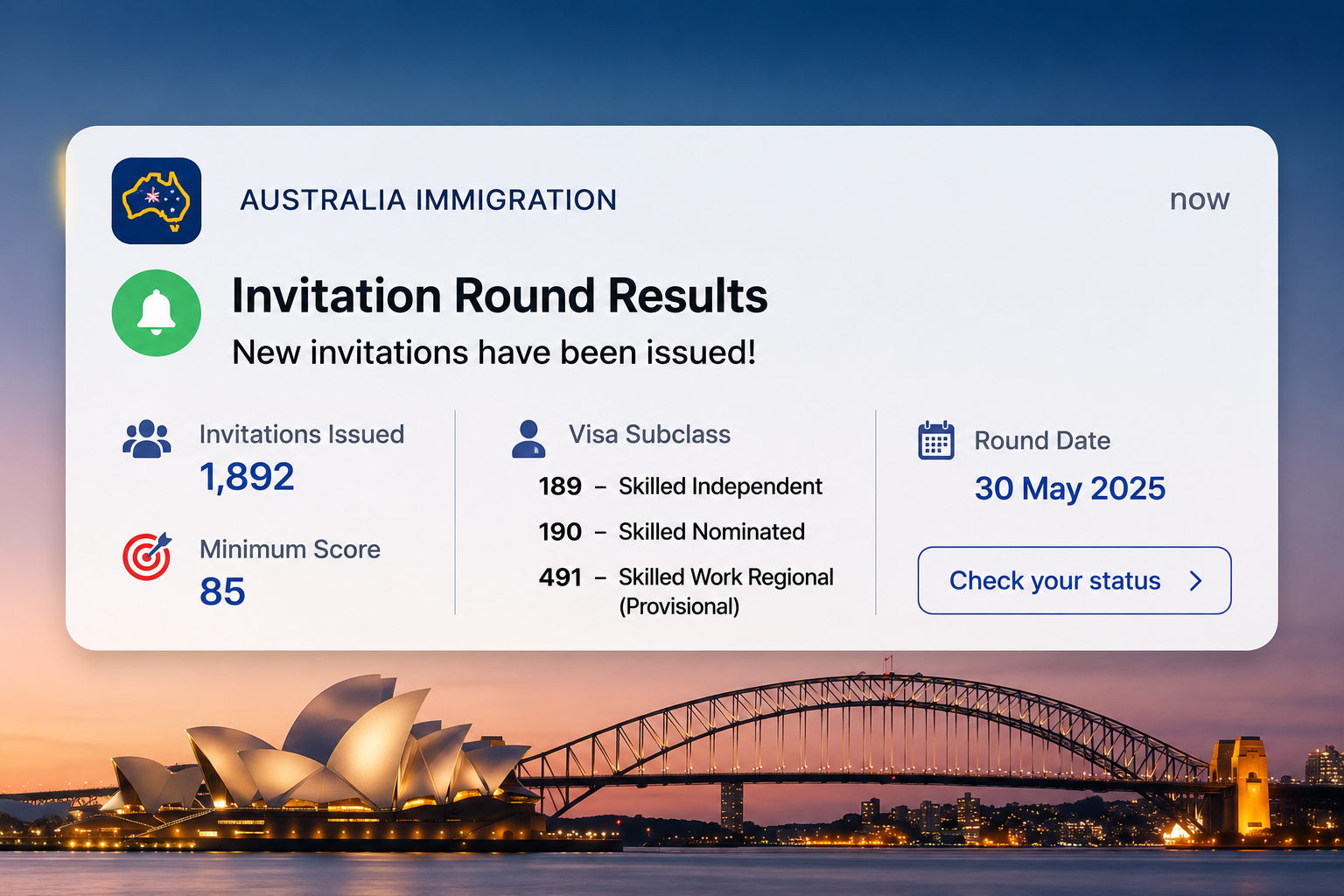
Many skilled migrants submit their Expression of Interest for Australian PR and then wait sometimes for months without receiving an invitation. The reason is often not a low score. It is that they do not fully understand how the invitation round system works or whether they are even positioned correctly within it.
Overview
Australia's skilled migration system uses a points-based framework managed through the SkillSelect platform. Instead of applying directly for a visa, most skilled migrants first submit an Expression of Interest, or EOI. The Department of Home Affairs then periodically invites the highest-ranked candidates from the EOI pool to apply for a visa.
These periodic selections are called invitation rounds. They run regularly for key visa subclasses including the Subclass 189 (Skilled Independent), Subclass 190 (State Nominated), and Subclass 491 (Skilled Work Regional). Each round draws from a ranked pool of candidates who have already submitted an EOI.
Key Eligibility Requirements
Before your EOI can be considered in any invitation round, you must meet a baseline set of requirements. Being in the pool does not automatically mean you will be invited but not meeting these conditions means you will not be considered at all.
- Skills Assessment: You must hold a positive skills assessment from the relevant Australian assessing authority for your nominated occupation.
- Nominated Occupation: Your occupation must appear on the relevant skilled occupation list for the visa subclass you are targeting.
- Age: You must be under 45 years of age at the time of invitation.
- English Language: You must meet the minimum English proficiency requirement as set for your visa subclass.
- Points Score: You must score at least 65 points on the points test to submit an EOI.
- EOI Status: Your EOI must be active and submitted in SkillSelect. Expired or withdrawn EOIs are not considered.
Application Process
Understanding the step-by-step flow helps you see exactly where invitation rounds fit into your overall PR journey.
- Complete your skills assessment with the relevant Australian authority for your occupation.
- Sit for your English language test and achieve the required score.
- Create a SkillSelect account and submit your Expression of Interest with accurate information.
- Receive your points score and ensure it reflects all eligible claims including age, qualifications, work experience, and partner skills.
- Wait for an invitation round. The Department of Home Affairs runs rounds and invites candidates in order of their points score, with ties broken by the date and time of EOI submission.
- Receive an Invitation to Apply and lodge your visa application within the specified timeframe.
- Submit all required documents and attend any health or character checks requested.
- Await a visa decision from the Department of Home Affairs.
Required Documents
When you receive an invitation, you will typically need to gather the following documents to support your visa application.
- Valid passport and travel documents
- Skills assessment outcome letter from the relevant authority
- English language test results
- Employment reference letters confirming work experience
- Educational qualifications and transcripts
- State nomination letter, if applicable for Subclass 190 or 491
- Health examination results from an approved panel physician
- Police clearance certificates from relevant countries
- Partner or spouse documents, if claiming partner points
Benefits and Limitations
Benefits
- The points-based invitation system is transparent and merit-based.
- You can update your EOI at any time to reflect improved scores or new credentials.
- Submitting an EOI carries no visa application fee costs apply only after an invitation.
- State nomination pathways like Subclass 190 can add significant points to your score, improving your chances of selection.
- A strong EOI submitted early gives you a tie-breaking advantage over candidates with the same score submitted later.
Limitations
- There is no guaranteed timeline for receiving an invitation some occupations see very few rounds.
- Invitation cut-off scores vary by occupation and round, and are not published in advance.
- An EOI expires after two years and must be resubmitted if not acted upon.
- Changes to occupation lists can affect your eligibility without prior notice.
- A high points score alone does not guarantee an invitation if demand for your occupation is low or the pool is competitive.
Common Mistakes to Avoid
- Submitting an incomplete or inaccurate EOI: Incorrect information can lead to complications after an invitation is issued.
- Not updating the EOI after improvements: If you improve your English score or gain more work experience, update your EOI immediately to reflect the higher points.
- Waiting without a strategy: If your current score is unlikely to attract an invitation, explore state nomination or regional pathways to boost your ranking.
- Ignoring EOI expiry dates: An expired EOI removes you from the pool entirely. Monitor your submission date carefully.
- Assuming all occupations invite equally: Some occupations receive invitations in nearly every round while others are rarely selected. Research your occupation's invitation history before committing to a pathway.
- Not seeking professional advice early: Many applicants lose valuable time submitting EOIs with avoidable errors or suboptimal scores.
Frequently Asked Questions
What is the difference between an EOI and a visa application?
An Expression of Interest is not a visa application. It is a profile you submit in SkillSelect indicating your interest in migrating. You can only apply for a skilled visa after receiving a formal Invitation to Apply from the Department of Home Affairs.
How often does the Department of Home Affairs run invitation rounds?
Invitation rounds are run periodically throughout the program year. The frequency and number of invitations issued in each round can vary depending on visa program planning and occupational demand. There is no fixed public schedule for when rounds will occur.
Can I be in the pool for more than one visa subclass at the same time?
Yes. You can submit EOIs for multiple skilled visa subclasses simultaneously through SkillSelect. This allows you to be considered across different pathways, including both independent and state-nominated options, at the same time.
What happens if I receive an invitation but am not ready to apply?
If you receive an Invitation to Apply, you must lodge your visa application within the timeframe specified in the invitation. If you miss this window, the invitation lapses and you would need to wait for a future round. It is important to have your documents ready before an invitation arrives.
Does updating my EOI reset my submission date?
Yes, in most cases updating key fields in your EOI, particularly those that change your points score or nominated occupation, will reset the date and time of your EOI submission. This can affect your tie-breaking position in the pool, so updates should be made only when there is a genuine improvement to claim.
How Visas Avenue Can Help
Visas Avenue's registered migration experts review your full profile skills assessment, occupation choice, points calculation, and EOI strategy to ensure you are correctly positioned in the pool before you submit. Our team helps you identify the strongest pathway, avoid costly errors, and monitor your EOI so you are ready to act the moment an invitation arrives.
Conclusion
Being in the SkillSelect pool is the starting point, not the finish line. Your points score, occupation demand, EOI accuracy, and submission timing all determine whether an invitation comes your way. Taking a strategic and informed approach from the beginning significantly improves your chances of receiving that invitation and making your Australian PR journey a reality.





Anusha V. Ramani
A group of diligent team members I must say! Very prompt and thorough in their job. Would...

Varun Thomas
Got our Canada PR done and I must say they are really professionals and they know what...

Vinay Upadhaya
Co-operative and Trained Staff to handhold you throughout the process. Mr.Vinay Upadhyay

Runzhun Gangrade
Great service and good support from the entire team. We had a great experience working...

Aakanksha Singh Chauhan
Thank you so much for your help Mrigya & Arpita. You keen sense of dedication to my...

Sanjeev Sharma
Very Professional Consultancy, which has actual meaningful escalation Matrix system for...