
Australia 482 Visa Explained: From Work Permit to PR Pathway
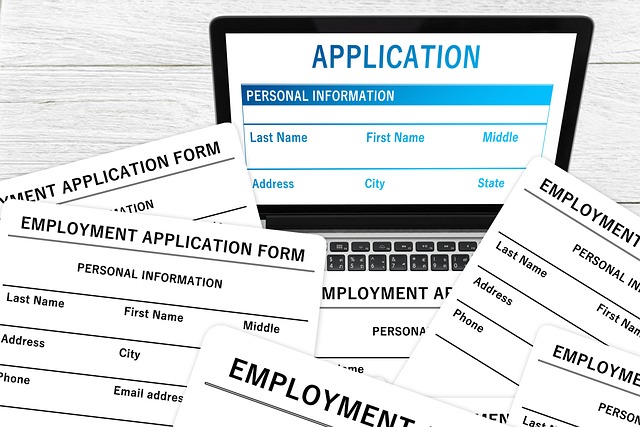
The Subclass 482 Visa, also known as the Temporary Skill Shortage (TSS) Visa, is one of Australia's primary employer-sponsored work visas. It allows Australian businesses to hire skilled overseas workers when they cannot find suitable local candidates. For many skilled migrants, it also serves as a genuine stepping stone toward permanent residency.
Overview
The 482 visa has three streams designed to meet different skill and industry needs. Understanding which stream applies to your occupation is the first critical step.
- Short-Term Stream: For occupations on the Short-Term Skilled Occupation List (STSOL), typically granted for up to two years.
- Medium-Term Stream: For occupations on the Medium and Long-Term Strategic Skills List (MLTSSL), granted for up to four years with a clearer PR pathway.
- Labour Agreement Stream: For workers sponsored under a formal labour agreement between an employer and the Australian government.
Key Eligibility Requirements
Meeting baseline eligibility is essential before lodging any application. Both the employer and the applicant must satisfy specific criteria.
- You must be sponsored by an approved Australian employer (standard business sponsor).
- Your nominated occupation must appear on an eligible skilled occupation list.
- You must have at least two years of relevant work experience in your nominated occupation.
- You must meet the English language requirement, demonstrated through an accepted test or exemption.
- Your skills must be assessed (for certain occupations) by the relevant assessing authority.
- You must satisfy standard health and character requirements.
- The position offered must meet Australia's Temporary Skilled Migration Income Threshold (TSMIT).
Application Process
The 482 visa involves three parties: the employer, a nominated position, and the visa applicant. The process typically follows these steps:
- Employer becomes a Standard Business Sponsor: The employer must apply to the Department of Home Affairs to become an approved sponsor if they are not already one.
- Employer nominates a position: The employer lodges a nomination application for the specific role and occupation they wish to fill.
- Labour Market Testing (LMT): For most occupations, the employer must demonstrate they advertised the role locally and could not find a suitable Australian candidate.
- Applicant lodges the visa application: Once the nomination is approved (or lodged, in some cases), the visa applicant submits their application online through the ImmiAccount portal.
- Provide supporting documents: Upload all required documentation as part of the application.
- Attend health examination if required: The Department may request a medical examination through an approved panel physician.
- Await decision: The Department assesses the application and issues a decision. Processing timeframes vary depending on individual circumstances.
Required Documents
Preparing a complete document set reduces processing delays significantly. Commonly required documents include:
- Valid passport and travel documents
- Proof of at least two years of relevant work experience (employment letters, payslips, references)
- English language test results (if applicable)
- Skills assessment outcome letter (where required)
- Evidence of qualifications and certifications
- Employer's sponsorship and nomination approval letters
- Health examination results (if requested)
- Police clearance certificates
- Completed Form 80 (Personal Particulars) if requested
Benefits and Limitations
Benefits
- Allows you to live and work in Australia for the duration of your visa grant.
- Your immediate family members (spouse and dependent children) can accompany you and have work and study rights.
- Medium-Term Stream holders may be eligible to apply for Employer Nomination Scheme (ENS) Subclass 186 permanent residency after meeting experience requirements.
- Provides access to Medicare (Australia's public health system) for eligible visa holders from certain countries with reciprocal healthcare agreements.
- You can travel in and out of Australia freely while the visa is valid.
Limitations
- You are tied to your sponsoring employer; changing jobs requires a new sponsorship arrangement.
- Short-Term Stream holders face more restricted PR pathways compared to Medium-Term Stream holders.
- The visa is temporary it does not grant permanent residency on its own.
- Labour Market Testing requirements place the compliance burden largely on the employer.
- Occupation eligibility depends on government list updates, which can change over time.
Common Mistakes to Avoid
- Choosing the wrong occupation code: Selecting an incorrect ANZSCO code can lead to delays or refusals. Always verify with a qualified adviser.
- Insufficient work experience evidence: Two years must be clearly documented. Gaps or unclear records create problems.
- Inadequate English test scores: Submitting scores below the required benchmark is a common rejection trigger.
- Employer non-compliance: Sponsors must meet ongoing obligations. Non-compliance by your employer can affect your visa status.
- Delaying the skills assessment: Assessments from professional bodies can take weeks. Start early.
- Ignoring character requirements: Failure to disclose criminal history, even minor matters, can result in refusal.
Frequently Asked Questions
Can I apply for permanent residency after holding a 482 visa?
Yes, in many cases. Medium-Term Stream holders who have worked for their sponsoring employer for a qualifying period may be eligible to apply for the Subclass 186 ENS visa. Short-Term Stream holders have fewer direct PR options but may explore other permanent visa pathways depending on their circumstances.
Can I change employers while on a 482 visa?
Yes, but your new employer must also be an approved sponsor and must nominate you for the same or a closely related occupation. You generally cannot start working for the new employer until the new sponsorship and nomination are approved.
Does my family get work rights on a 482 visa?
Yes. Secondary applicants including your spouse or de facto partner and dependent children who are granted the 482 visa as secondary holders generally have full work and study rights in Australia.
Is a skills assessment always required for a 482 visa?
Not always. Skills assessments are mandatory for certain occupations but not all. Whether an assessment is required depends on the occupation and the assessing authority. Your sponsoring employer and a qualified immigration adviser can confirm this for your specific situation.
What happens if my 482 visa expires before I get PR?
If your visa expires before you have secured permanent residency, you will generally need to either renew your 482 visa (if eligible), transition to another temporary visa, or depart Australia. Planning your PR application well before your visa expiry date is strongly advisable.
How Visas Avenue Can Help
Navigating employer sponsorship, occupation lists, and PR transition requirements can be complex. Visas Avenue offers a personalised profile assessment to evaluate your eligibility for the 482 visa and identify the most suitable PR pathway for your situation. Book a consultation with our immigration team to get step-by-step guidance tailored to your profile and career goals.
Conclusion
The Australia Subclass 482 Visa is a practical, structured route for skilled professionals to work in Australia and, in many cases, build toward permanent residency. Understanding the streams, eligibility criteria, and compliance requirements from the outset significantly improves your chances of a smooth application. Professional guidance at each stage can make a meaningful difference in the outcome.






Anusha V. Ramani
A group of diligent team members I must say! Very prompt and thorough in their job. Would...

Varun Thomas
Got our Canada PR done and I must say they are really professionals and they know what...

Vinay Upadhaya
Co-operative and Trained Staff to handhold you throughout the process. Mr.Vinay Upadhyay

Runzhun Gangrade
Great service and good support from the entire team. We had a great experience working...

Aakanksha Singh Chauhan
Thank you so much for your help Mrigya & Arpita. You keen sense of dedication to my...

Sanjeev Sharma
Very Professional Consultancy, which has actual meaningful escalation Matrix system for...